
Aqua Sattva: a plant-based filter prototype developed by two students
News - 24 August 2026
Indian students Naina and Nayantara Singh have developed Aqua Sattva, a water-filter prototype using plant-derived materials and agricultural residues. Their proposal targets two challenging contaminants: PFAS and microplastics.
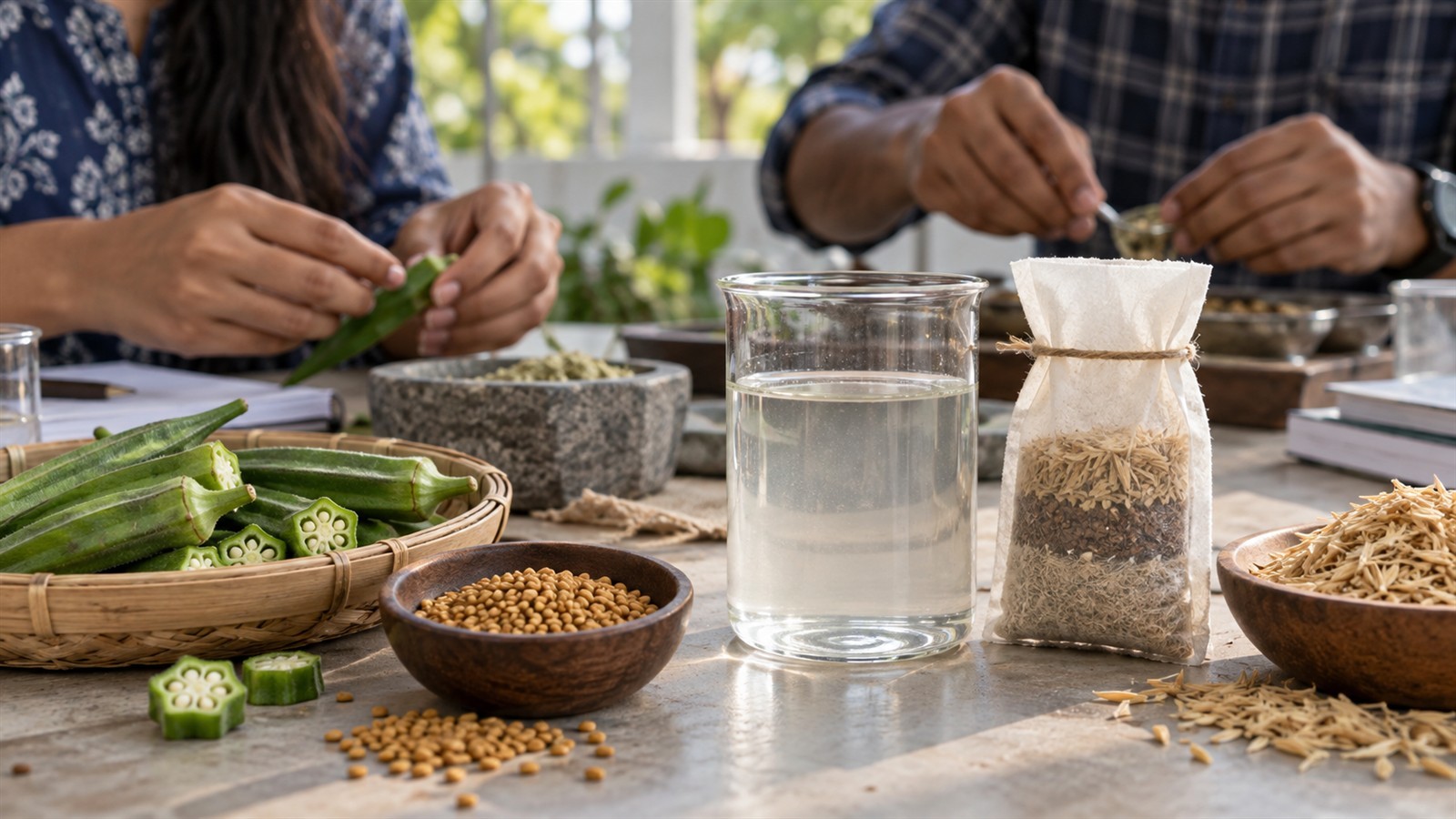
Indian students Naina and Nayantara Singh have developed Aqua Sattva, a water-filter prototype using plant-derived materials and agricultural residues. Their proposal targets two challenging contaminants: PFAS and microplastics.
According to The Economic Times, the system combines polymers from okra and fenugreek with rice-husk biochar in sachets. The article reports laboratory tests showing up to 93% removal across 20 PFAS compounds and a reduction in microplastics in the samples tested.
These are press-reported results for a prototype, not certification that any water becomes safe to drink or proof of effectiveness in all conditions. We could not find a complete public protocol to independently check the data, filter lifetime or handling of used sachets. Water intended for drinking always requires appropriate testing and devices that meet applicable standards.
The approach is still interesting: it explores accessible, low-energy solutions using agricultural by-products. Independent, reproducible testing is the crucial next step.
The cover is an AI-generated illustration, not a photograph of the Aqua Sattva device.
Source: The Economic Times, June 10, 2026.
Potrebbero interessarti
-
Mixed municipal waste: can AI recover more useful materials?
News - 20 September 2026
-
From polyamide microplastics to UV-blocking films
News - 16 September 2026
-
August 2026: 14 cleanups, 90 bags and a community in action
News - 1 September 2026
-
PolyCycl and the challenge of hard-to-recycle flexible plastics
News - 31 August 2026
-
Circular packaging: two European projects offer different approaches
News - 28 August 2026