From PET to levodopa: the Edinburgh researchers' experiment
News - 30 July 2026
A University of Edinburgh experiment uses engineered bacteria to turn PET into levodopa, opening new possibilities for plastic upcycling.
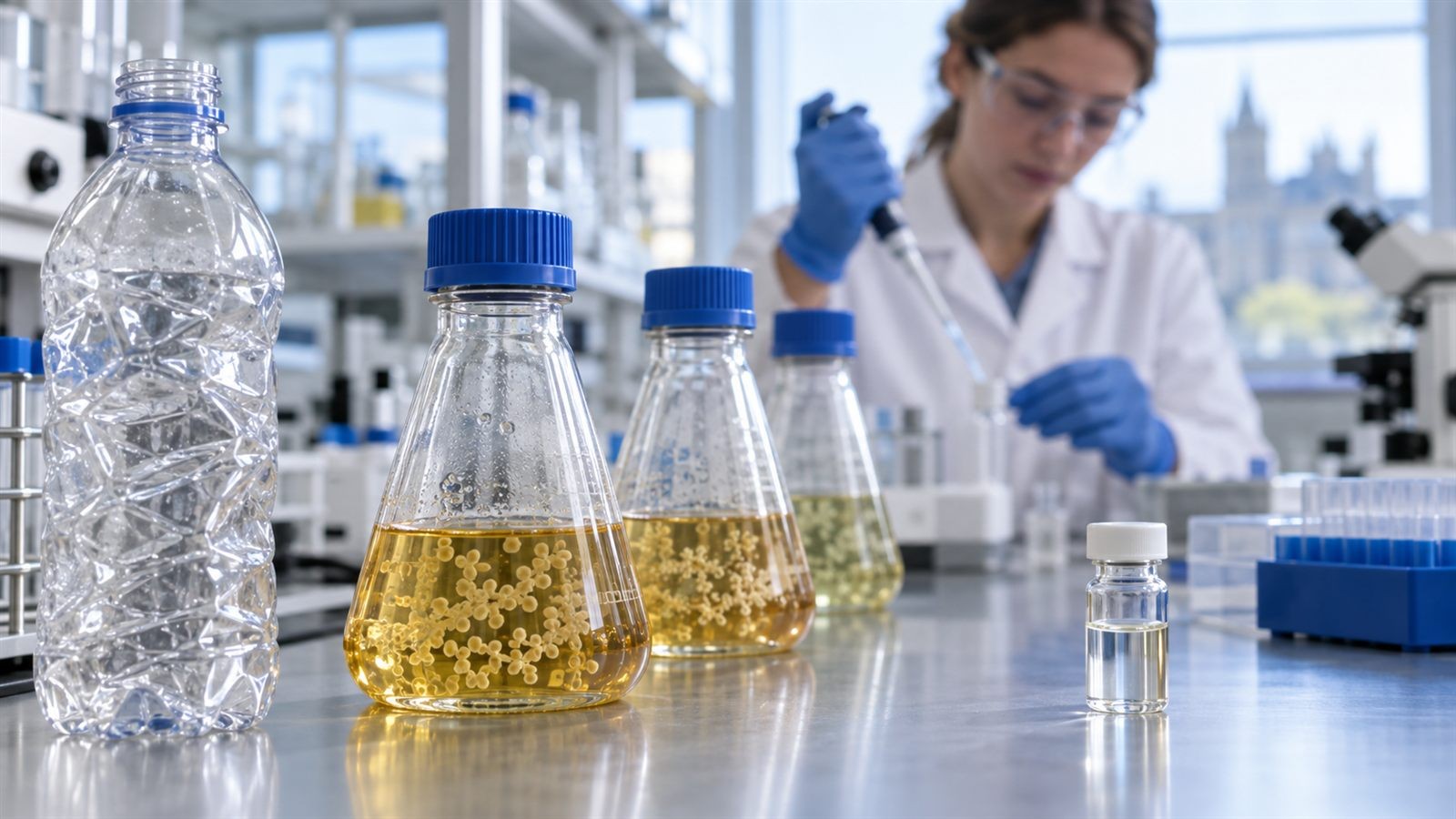
Could a used plastic bottle become a source of molecules for medicine production? University of Edinburgh researchers have demonstrated a biological route in the laboratory for turning PET into levodopa, or L-DOPA, an active ingredient used in Parkinson's treatment.
As the university and the research paper explain, PET is first broken down into chemical building blocks, including terephthalic acid. Engineered E. coli bacteria then carry out a sequence of reactions leading to L-DOPA. The team produced and isolated the compound at preparative scale, including from a post-consumer bottle.
This does not mean medicines on pharmacy shelves are already made from recycled bottles. Industrial and pharmaceutical use would require further checks on purity, safety, yield, costs and environmental performance. The study does show that carbon in plastic waste may have uses more valuable than disposal.
The result suggests a wider view of recycling: it need not always produce another plastic object. Under the right technical and regulatory conditions, recovered material could enter other value chains.
The cover is an AI-generated illustration, not a photograph of the laboratory.
Sources: University of Edinburgh; study in Nature Sustainability.
Potrebbero interessarti
-
Mixed municipal waste: can AI recover more useful materials?
News - 20 September 2026
-
From polyamide microplastics to UV-blocking films
News - 16 September 2026
-
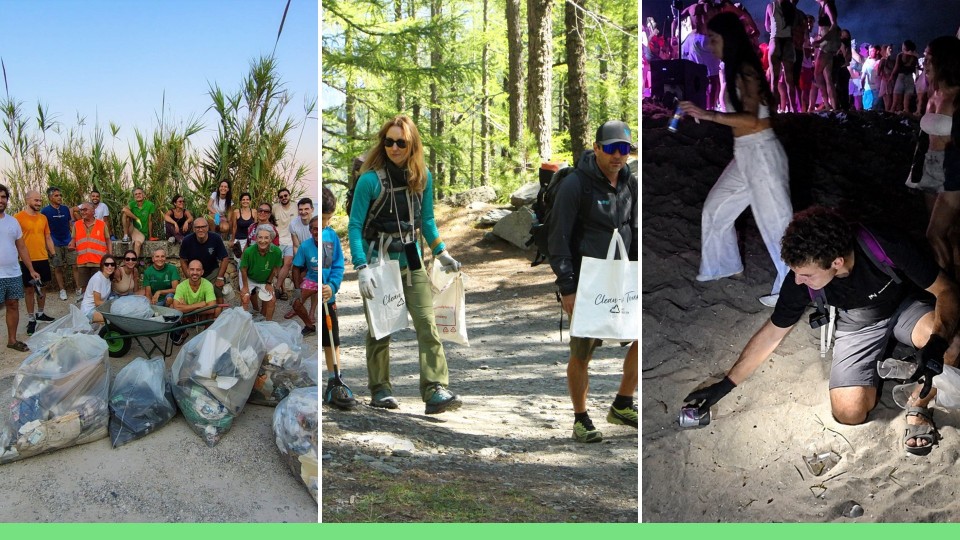
August 2026: 14 cleanups, 90 bags and a community in action
News - 1 September 2026
-
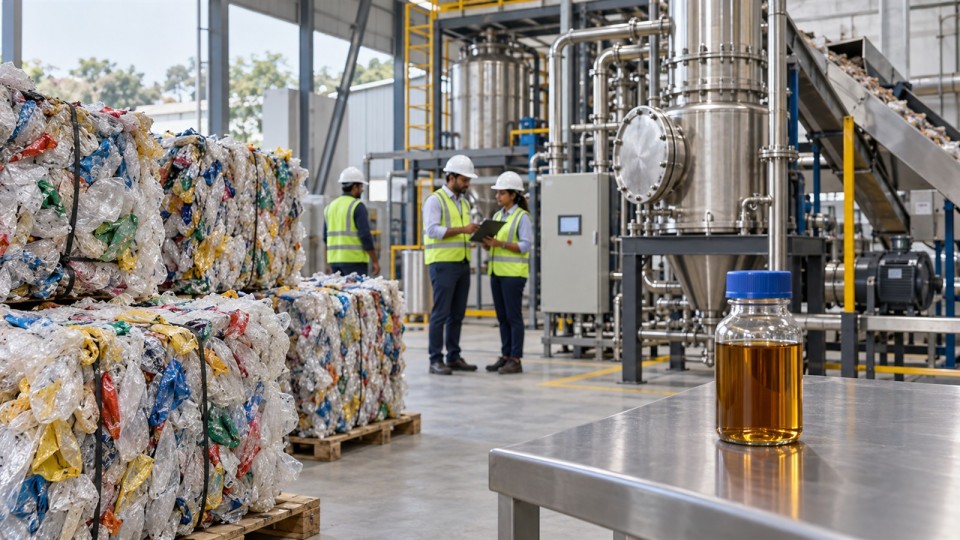
PolyCycl and the challenge of hard-to-recycle flexible plastics
News - 31 August 2026
-
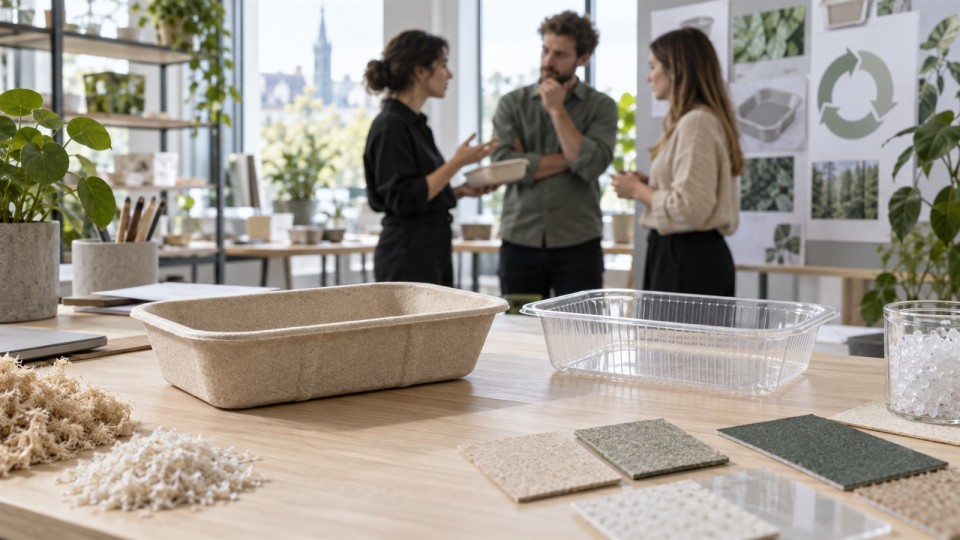
Circular packaging: two European projects offer different approaches
News - 28 August 2026