
From polyamide microplastics to UV-blocking films
News - 16 September 2026
A Saitama University team in Japan has transformed polyamide microplastics into tiny carbon quantum dots and incorporated them into flexible films. The experimental aim is to make materials that transmit some visible light while reducing exposure to ultraviolet radiation.
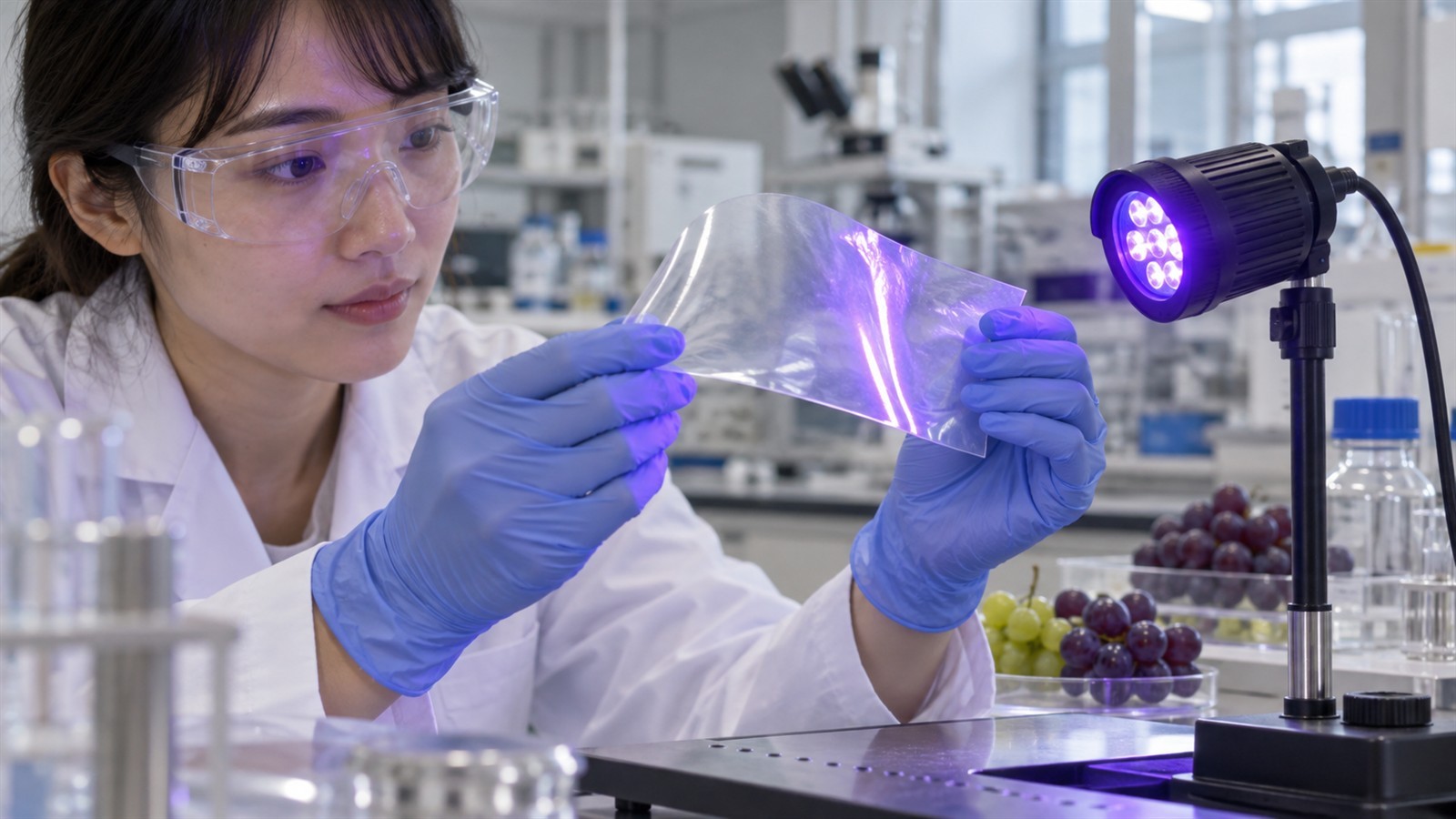
A Saitama University team in Japan has transformed polyamide microplastics into tiny carbon quantum dots and incorporated them into flexible films. The experimental aim is to make materials that transmit some visible light while reducing exposure to ultraviolet radiation.
The university's notice points to the study published online in Materials Research Bulletin. Researchers prepared several quantum-dot variants and added them to a polyvinyl alcohol matrix. One formulation blocked 89.1% of UVC and 73.1% of UVB in laboratory tests while retaining some transparency. In a grape-storage experiment, the film reduced weight loss compared with unwrapped fruit.
These are laboratory tests, not an approved or marketed food package. Before food-contact use, researchers would need to assess possible nanomaterial migration, long-term stability and performance in a real supply chain.
The study suggests a potential use for a problematic plastic fraction. It does not remove the need to prevent microplastics from entering the environment in the first place.
The cover is an AI-generated illustration, not a photograph of the experiment.
Sources: Saitama University, August 28, 2026; study in Materials Research Bulletin.
Potrebbero interessarti
-
Mixed municipal waste: can AI recover more useful materials?
News - 20 September 2026
-

August 2026: 14 cleanups, 90 bags and a community in action
News - 1 September 2026
-
PolyCycl and the challenge of hard-to-recycle flexible plastics
News - 31 August 2026
-

Circular packaging: two European projects offer different approaches
News - 28 August 2026
-

Aqua Sattva: a plant-based filter prototype developed by two students
News - 24 August 2026