
PFAS in water: an experimental material captures them quickly
News - 16 August 2026
PFAS are persistent substances. Removing them from water is difficult, and the material on which they accumulate must then be managed. A Rice University-led team has studied a layered copper-and-aluminium material designed to capture them rapidly.
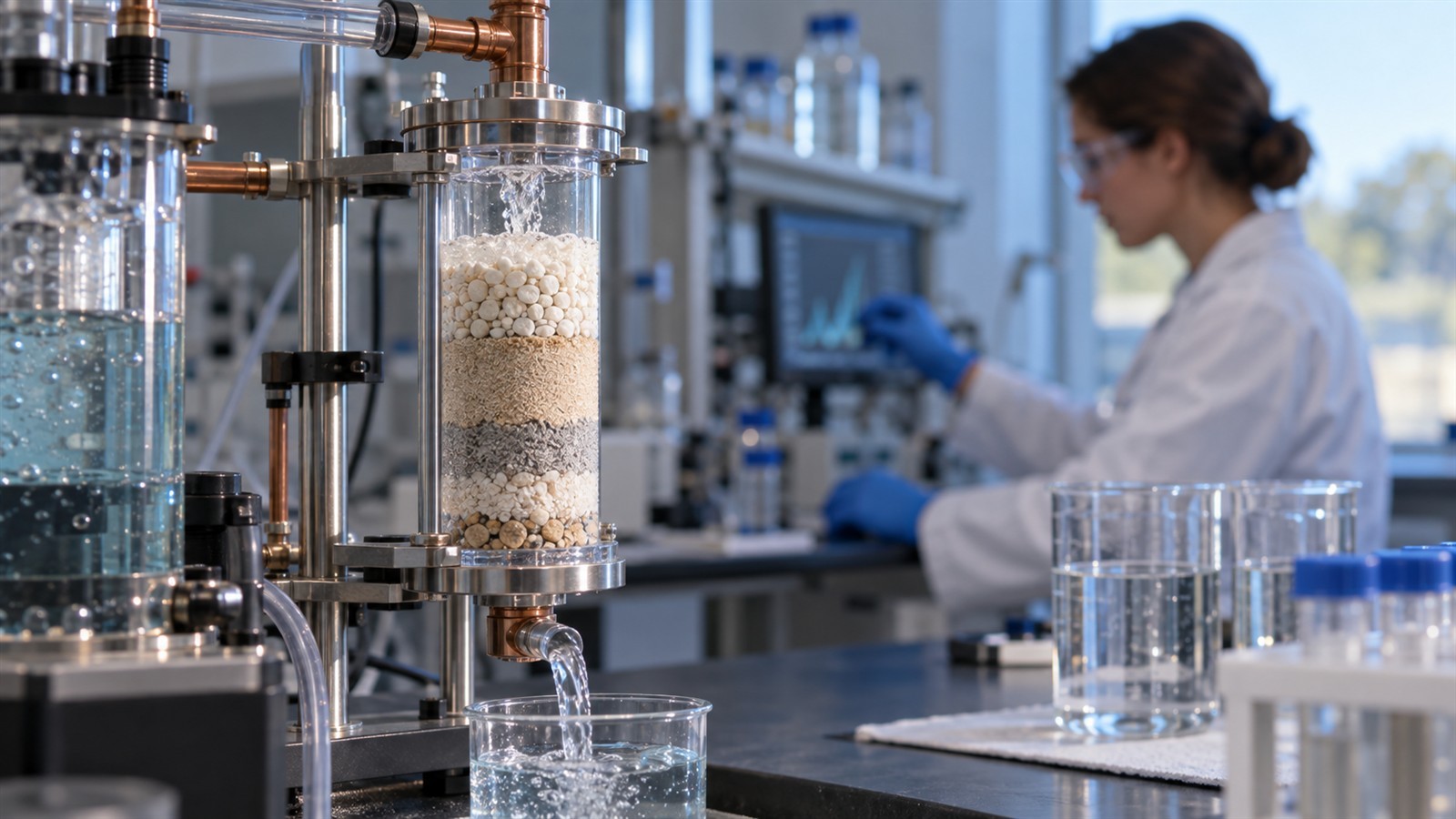
PFAS are persistent substances. Removing them from water is difficult, and the material on which they accumulate must then be managed. A Rice University-led team has studied a layered copper-and-aluminium material designed to capture them rapidly.
According to Rice University, the material performed well in tests with river water, tap water and wastewater, including continuous-flow systems. The researchers report strong performance against the comparison materials in their study. These are experimental results, not a guaranteed performance level for every PFAS compound or treatment plant.
The research also addresses what happens next. By heating the saturated material with calcium carbonate, the team decomposed more than half of the trapped PFAS and regenerated the material for at least six preliminary cycles. It would therefore be inaccurate to say this technology “destroys all PFAS”.
Fast capture and potential material reuse are promising. Wider application will require further checks on by-products, costs and long-term performance. Preventing these chemicals from entering water remains essential.
The cover is an AI-generated illustration, not a photograph of the material.
Potrebbero interessarti
-
Mixed municipal waste: can AI recover more useful materials?
News - 20 September 2026
-
From polyamide microplastics to UV-blocking films
News - 16 September 2026
-

August 2026: 14 cleanups, 90 bags and a community in action
News - 1 September 2026
-
PolyCycl and the challenge of hard-to-recycle flexible plastics
News - 31 August 2026
-

Circular packaging: two European projects offer different approaches
News - 28 August 2026